Not sure which nonprofit LMS is right for your team? Compare 9 top platforms for staff and volunteer training, with features, pricing, and pros and cons.

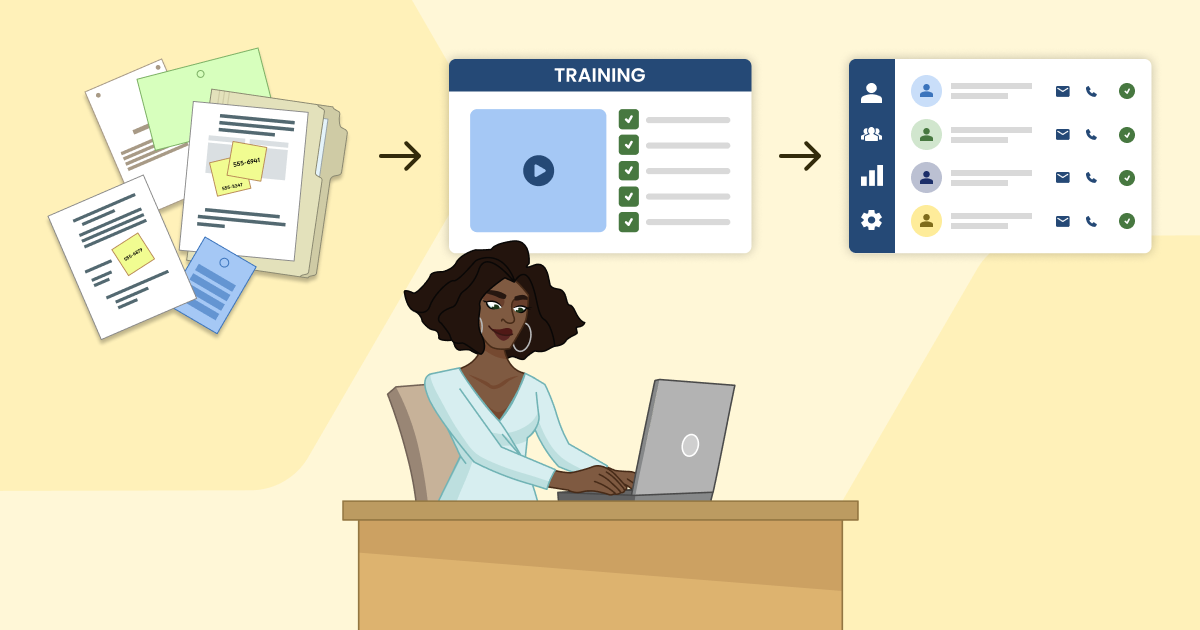
Training keeps a nonprofit running. Staff need onboarding, volunteers need orientation, and everyone needs a way to stay up to date on policies, safety, and skills. The problem is that many nonprofits run their training with a patchwork of shared documents, one-off webinars, and whatever a supervisor remembers to mention on someone's first day.
A learning management system (LMS) fixes that by giving your organization one place to build, assign, and track training. But most LMS platforms were built for corporations with big training budgets and dedicated learning teams, not for nonprofit staff and a rotating cast of volunteers. The gap between typical LMS features and nonprofits' needs means your organization must be deliberate in choosing the right solution.
This guide breaks down what to look for in a nonprofit LMS and covers nine platforms worth considering, including what each one does well and where it falls short.

What to Look for in a Nonprofit LMS
Choosing the right LMS for your organization begins with a well-informed search. The criteria below are a great place to start. Each one maps to a challenge many nonprofits face, such as assisting a training coordinator without an instructional design background, training a volunteer roster that doubles every summer, or proving to your board that training took place.
A proper nonprofit LMS should include the following elements:
- Nonprofit-friendly pricing: based on organization size, budget, or unlimited users, not a per-seat model that penalizes you for growing your volunteer base
- Ease of use for non-technical staff: templates and drag-and-drop tools, not code
- Ready-made content: pre-built courses on topics like harassment prevention, safety, or soft skills
- Mobile access: volunteers and field staff often need to train from a phone
- Compliance tracking and reporting: a clear record of who completed what training and when
- Branding and customization: a portal that looks and feels like your organization
- Integrations: connects with the tools you already use, like a CRM, an association management system, or HR software
- Accessibility: WCAG compliance, so training is usable by staff and volunteers with disabilities
- Support: a responsive team you can lean on during setup and beyond
Check off the criteria that matter most to your organization, and the list below will highlight your best matches.
Select the features most important to your organization below to filter the list.
LMS Providers Ranked & Compiled
Top Nonprofit LMS Providers
1. Niche Academy: Best Overall Nonprofit LMS
Niche Academy has spent over a decade refining an LMS for libraries and nonprofits, which now serves more than 1,700 organizations across both sectors.
Subscriptions include access to a market of hundreds of ready-made tutorials on topics such as workplace safety, soft skills, and harassment prevention, developed by Niche Academy's Learning Design team and contributed by other subscribers. Organizations can use that content as-is or personalize it, and pricing is based on organizational size rather than user count, making it easy to onboard large or fluctuating groups of volunteers at no extra cost.
Beyond the content library, Niche Academy includes tools for building tutorials from scratch with video, images, and interactive activities, with no instructional design background required. Plus, administrators can use tracking and reporting tools to prove impact to funders or leadership. A website widget also lets organizations share public-facing tutorials directly with their communities.
.png?width=2534&height=1261&name=Niche%20Academy_homepage%20screenshot%20(1).png)
Pros:
- Ready-made tutorial library built specifically for library and nonprofit training needs
- Size-based pricing makes onboarding volunteers and seasonal staff affordable
- Authoring tools designed for non-experts, no instructional design background needed
- Strong reporting for compliance and funder documentation
- Personalization, WCAG 2.1 AA accessibility compliance, and integrations like SSO and LTI round out the platform without adding complexity for administrators.
Cons:
- The content library is most useful to nonprofits, libraries, and municipalities specifically, so organizations outside those sectors may not get as much value from it.
- Niche Academy is built with small- to mid-sized nonprofits, small to medium municipalities, and libraries of all sizes in mind. The largest national nonprofits may find a platform designed for enterprise-scale operations to be a better fit.
2. TopClass: Best for Associations
TopClass is designed for associations and organizations managing continuing education and certification programs. It handles CE credit tracking, Maintenance of Certification workflows, and digital badging, and integrates directly with association management systems such as iMIS and Salesforce. Its e-commerce tools also let associations turn education programs into a non-dues revenue stream.
.png?width=2539&height=1261&name=TopClass_homepage%20screenshot%20(2).png)
Pros:
- Deep integration with association management systems, especially iMIS
- Strong certification and continuing education credit tracking
- Built-in e-commerce for monetizing courses and programs
- Available in multiple languages out of the box
Cons:
- Geared more toward associations and certification-heavy organizations than general volunteer or staff training
- Per-user annual pricing can get expensive for organizations with large volunteer bases
- Implementation and integration setup take more time than simpler platforms
3. SC Training: Best for Mobile Learning
SC Training, formerly known as EdApp, is a mobile-first platform built around short, swipeable lessons rather than long courses. It includes a large library of editable, ready-made courses, AI-assisted course creation, and gamification features like leaderboards and spaced repetition, all designed to be completed in just a few minutes on a phone.
.png?width=2546&height=1219&name=SC%20Training_homepage%20screenshot%20(1).png)
Pros:
- Mobile-first design that's easy for frontline volunteers and field staff to use
- Large library of ready-made, editable microlearning courses
- Free plan, with AI tools to speed up course creation
- Fast to set up, often ready for use within a day
Cons:
- SC Training is built for short, bite-sized lessons rather than longer-form, in-depth training programs.
- Reporting and analytics are relatively basic compared to other nonprofit LMS platforms.
- Some advanced features and customization sit behind paid tiers.
4. Moodle: Best Open-Source LMS
Moodle is free, open-source software used by hundreds of millions of learners worldwide. Because it's open source, there's no licensing fee, and a library of more than 2,000 plugins means it can be customized to do almost anything, from quizzes and forums to proctored exams and video conferencing. Nonprofits with in-house technical capacity, or the budget for a hosting partner, can build a system that fits their exact workflows.
.png?width=2543&height=1217&name=Moodle_homepage%20screenshot%20(1).png)
Pros:
- Free and open source, with no per-user licensing costs
- Vast plugin library allows for a high degree of customization
- The software is backed by a large global community and extensive documentation.
- MoodleCloud offers an affordable hosted option starting around $130 a year for 50 users.
Cons:
- Moodle requires technical skill to install, host, and maintain, or you will need to pay a hosting partner.
- The interface feels dated and can be overwhelming for new administrators.
- Though the software itself is free, the hosting, setup, and maintenance costs can still add up.
5. Tovuti: Best Multilingual LMS
Tovuti is an all-in-one platform with strong multilingual support, making it a good fit for nonprofits serving diverse communities. It includes gamification, social learning features, event and fundraising tools, and WCAG/Section 508 accessibility compliance, and it offers unlimited users with predictable pricing plus nonprofit discounts.
.png?width=2545&height=1235&name=Tovuti_homepage%20screenshot%20(1).png)
Pros:
- Strong multilingual and accessibility support
- The platform combines training, event management, and community features.
- Every plan supports an unlimited number of users, so adding more volunteers or staff doesn't increase the per-seat cost.
- Discounts for nonprofits and multi-year contracts
Cons:
- Pricing is entirely quote-based, so you'll need to speak with sales to know your actual cost.
- Some users report a learning curve when first setting up the platform.
- Reporting and analytics could be more detailed, according to several customer reviews.
6. Teachfloor: Best for Peer Learning
Teachfloor is built around cohort-based, collaborative learning rather than solo, self-paced courses. Peer review, group discussions, and community spaces are core to the platform, which makes it a strong fit for nonprofits that want volunteers or staff to learn from each other, not just from a course.
.png?width=2542&height=1266&name=Teachfloor_homepage%20screenshot%20(1).png)
Pros:
- Built around collaboration, with peer review and group activities at its core
- Easy to set up without technical expertise
- Offers nonprofit discounts and a 14-day free trial
- Responsive, well-reviewed customer support
Cons:
- Pricing scales with active students, so costs can grow as your program grows.
- Integrations with HR systems are limited unless connected via Zapier or an API.
- Reporting depth is lighter than that of some enterprise LMS platforms.
7. Oasis LMS: Best for Professional Certification
Oasis LMS was built specifically for continuing education and certification, particularly for associations and healthcare organizations. It automates CE and CME credit tracking to quarter-hour increments, issues certificates automatically, and integrates with accreditation systems such as ACCME and CPE Monitor.
.png?width=2485&height=1253&name=OasisLMS_homepage%20screenshot%20(1).png)
Pros:
- Built specifically for CE, CME, and certification tracking, not retrofitted from generic training software
- Automates credit tracking and certificate issuance, cutting down on manual staff work.
- Deep integrations with association and healthcare accreditation systems
- Responsive support team
Cons:
- Oasis is best suited to organizations with heavy continuing education or certification needs, which may require more infrastructure than a typical small nonprofit does.
- Setup and configuration involve a learning curve, particularly for first-time administrators.
- Entry-level pricing starts lower, but the Standard and Professional tiers, built for full CE/certification workflows, range from $800 to $1,500 per month, which is higher than several other platforms on this list.
8. iSpring LMS: Best for Converting Existing Training Content
iSpring LMS is worth a look if your nonprofit already has training built in PowerPoint. Its bundled authoring tool, iSpring Suite, converts PowerPoint presentations into interactive, trackable courses with quizzes and narration, so existing materials don't have to be rebuilt from scratch.
.png?width=2541&height=1265&name=iSpring%20LMS_homepage%20screenshot%20(1).png)
Pros:
- Converts existing PowerPoint content into interactive, trackable courses quickly
- Pay-per-active-user pricing works well for organizations with very little staff and volunteer turnover
- Easy-to-use interface for both admins and learners
- Mobile app supports offline learning, which is useful for field staff
Cons:
- The full authoring toolkit only runs on Windows, which is a hurdle for Mac-based teams.
- Reporting is fairly basic, and complex analysis often means exporting to Excel.
- iSpring LMS offers minimal social or peer learning tools.
9. Absorb LMS: Best for AI-Powered Course Creation
Absorb LMS uses AI to speed up both course creation and the learner experience. Its Aura Create tool can generate a structured course from a prompt or an uploaded document, and its recommendation engine suggests relevant content to learners based on their role and history.
.png?width=2543&height=1268&name=Absorb%20LMS_homepage%20screenshot%20(1).png)
Pros:
- AI-assisted course creation cuts down the time it takes to build training from scratch.
- Modern, polished user interface
- Strong integrations with HR and CRM systems
- Discounts for nonprofits and multi-year contracts
Cons:
- The mobile app has more limited functionality than the desktop platform.
- New administrators often face a learning curve during setup.
- The AI-driven approach to course creation may not sit well with nonprofits concerned about AI use, data privacy, or environmental impact.
Nonprofit LMS FAQs
Do nonprofits need a paid LMS, or is a free tool good enough?
Free tools can work for a very small organization with simple, one-off training needs. But most nonprofits outgrow free plans quickly once they need to track compliance, onboard volunteers on a recurring basis, or report training outcomes to a board or funder. A low-cost or nonprofit-priced LMS usually pays for itself in staff time saved.
How much does a nonprofit LMS cost?
Pricing varies widely. Some platforms charge per user, which can get expensive fast if you have a large or fluctuating volunteer base. Others price based on organization size or offer unlimited users at a flat rate, which tends to be more predictable for nonprofits.
Can volunteers and seasonal staff use an LMS?
Yes, and this is one of the biggest reasons nonprofits invest in one. Platforms with budget-based pricing make it practical to onboard large or seasonal groups of volunteers without incurring higher per-person costs.
Do I need instructional design experience to build training?
No. Most nonprofit-friendly LMS platforms include templates, drag-and-drop authoring tools, and ready-made content libraries so a program director or HR manager can build a course without a background in instructional design.
Ready to See What a Nonprofit-Built LMS Can Do?
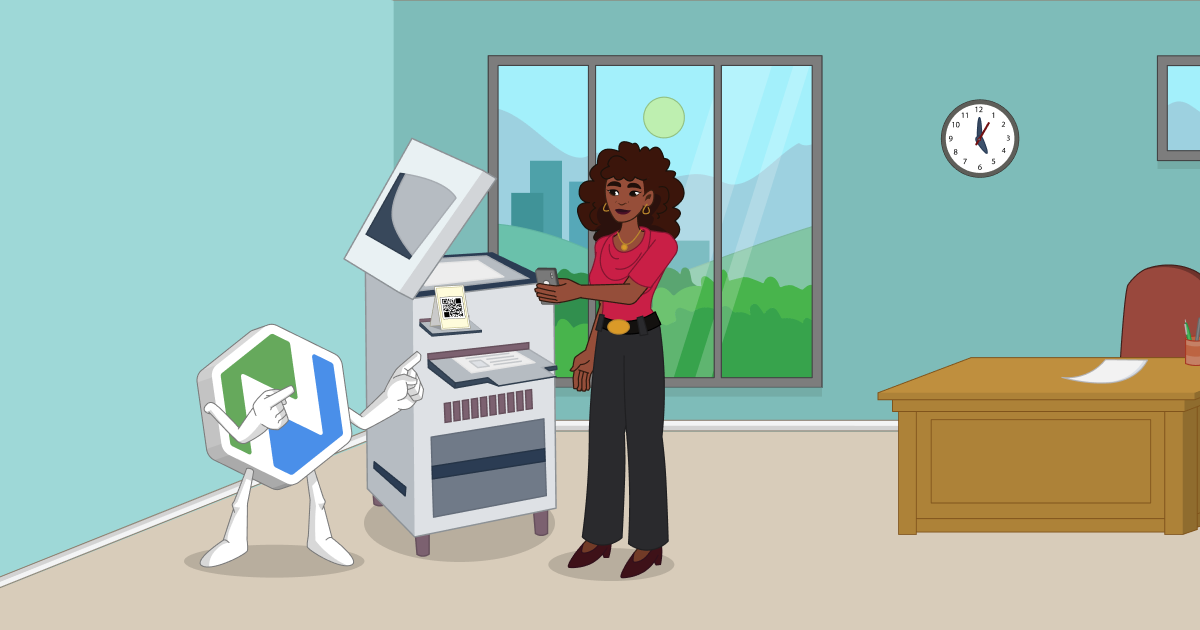
Choosing the right nonprofit LMS comes down to finding a platform that matches your organization's size, budget, and training goals. If you want a system built specifically for nonprofits and libraries, with ready-made content and pricing that scales with your organization instead of your headcount, we'd love to show you around.

.png)
.png)

.png)
.png)

.png)
.png)

.png)