Webinar: AI Literacy Made Practical: Ethical & Effective AI Use in Libraries
In this free webinar, Brady Lund shares a practical approach to AI literacy to help patrons explore AI tools and promote responsible AI use.

.png?width=600&height=350&name=10-28%20Lang%20Webinar%20Images%20-%20Settings%20image%20(600x350px).png)
Your donors want to give. The real question is: are your appeals inspiring them to act? In this webinar, nonprofit consultant Sarah B. Lange walks you through the art and psychology of donor-centered fundraising appeals that actually generate revenue. From direct mail to email campaigns, learn how to craft compelling messages that connect emotionally, motivate donors, and increase giving. This session blends strategy, storytelling, persuasive writing, donor psychology, and real-world fundraising techniques into a step-by-step framework nonprofits can immediately apply to year-end campaigns, annual funds, and donor communications.
.png?width=600&height=350&name=11-04%20-%20Bangura%20Webinar%20Images%20-%20Settings%20image%20(600x350px).png)
Join Lu Bangura for this webinar for library professionals who want to make stronger connections between their programming and their organization’s strategic priorities. Lu will provide a practical approach for using the strategic plan as more than a guiding document and turning it into a useful tool for programming decisions. Participants will explore how programming can become one of the clearest ways a library puts its strategic plan into action. Whether your library is implementing a new strategic plan or trying to strengthen the connection between an existing plan and day-to-day programming, you'll leave with practical tools you can use with your team to make more intentional programming decisions.
.png?width=600&height=350&name=11-18%20Anderson%20Webinar%20Images%20-%20Settings%20image%20(600x350px).png)
Explore what effective supervision looks like in today’s mission-driven workplace. Join Kari Anderson to learn how supervisors can build relationships, strengthen performance, and create teams where people and the mission thrive. Supervision in libraries and nonprofit organizations is about far more than assigning tasks, approving schedules, and tracking deadlines. In this practical and candid webinar, Kari will explore what effective supervision looks like in today’s mission-driven workplace. Participants will examine how to set expectations, provide feedback, address concerns, and create accountability without losing empathy.
.png?width=600&height=350&name=12-2%20Tuttle%20Webinar%20Images%20-%20Settings%20image%20(600x350px).png)
Over the last few years, there has been a massive increase in the use of AI tools and the companies that make them. As more and more people use AI, what does it mean for someone to be competent? This presentation will cover the intersection of AI use and competency. By the end of this session, you’ll be able to: define competency; analyze learner motivations in relation to their competency level; and describe the intersection of competency, connectivist learning theory, and the usage of AI tools.
.png?width=600&height=350&name=12-9%20Hollerbach%20and%20Feldmann%20Webinar%20Images%20-%20Settings%20image%20(600x350px).png)
Library advocacy isn’t just the responsibility of the library director or a handful of staff—it’s something everyone can do. In this webinar, Christine Feldmann and Catherine Hollerbach will explore how library staff, trustees, Friends and Foundations, and customers can build relationships and take meaningful action to strengthen support for libraries. We’ll focus on practical strategies for building, maintaining and, when necessary, rebuilding relationships with elected officials. Learn how to reestablish connections, find common ground, demonstrate the value of the library, and create meaningful opportunities for elected officials to engage with the library and its community.
.png?width=600&height=350&name=12-16%20Downie%20Webinar%20Images%20-%20Settings%20image%20(600x350px).png)
How well does your library really know the community it serves — including the people and households it is not currently reaching? In this webinar, Ian Downie will explore a five-part approach to community-led library marketing. We’ll look at how libraries can move beyond headline cardholder numbers to establish a credible picture of their true community reach, better understand the people beyond their existing patron base, identify the right audiences and opportunities for growth, create more relevant outreach, and measure the impact of their efforts. We'll examine how stronger community intelligence can help libraries distinguish between what they know, what they assume, and what they still need to discover.

.png?width=677&height=426&name=3.%2008-05%20Lund%20Webinar%20Images%20-%20Feature%20Image%20(1200x628px).png)
In this free webinar, Brady Lund shares a practical approach to AI literacy to help patrons explore AI tools and promote responsible AI use.

Build a stronger employee onboarding process with six actionable steps for setting goals, training content, mentorship, and measuring long-term...
.png?width=677&height=426&name=3.%2010-14%20Wahler%20webinar%20Images%20-%20Feature%20Image%20(1200x628px).png)
In this free webinar, Beth Wahler shows how to support high-needs patrons and library staff.
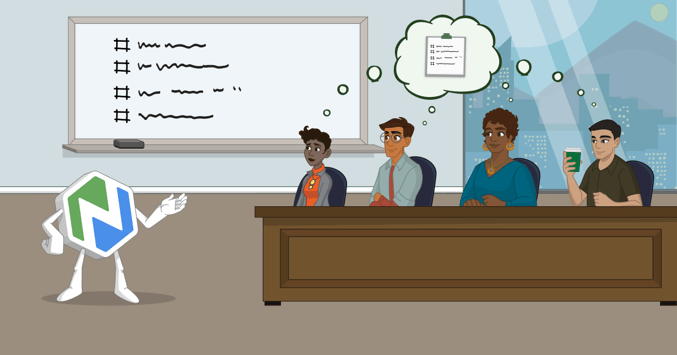
Learn how to use refresher training to reinforce learning so staff and volunteers retain knowledge, practice skills, and apply what they learn.
In this free webinar, Brady Lund shares a practical approach to AI literacy to help patrons explore AI tools and promote responsible AI use.
Build a stronger employee onboarding process with six actionable steps for setting goals, training content, mentorship, and measuring long-term...
In this free webinar, Beth Wahler shows how to support high-needs patrons and library staff.
Learn how to use refresher training to reinforce learning so staff and volunteers retain knowledge, practice skills, and apply what they learn.