Microlearning uses one short resource for one learning objective. Learn when it works, where it falls short, and how to use it with staff and volunteers.
We all know the feeling of coming home from a long day and needing a quick, easy dinner. Something you can pull out of the fridge and eat right away. But, as you rummage around the cold shelves, all you find are ingredients. You know, the stuff that makes food, but isn't food yet. Sigh.
You take stock of what you have and do a Google search for a quick, easy, one-pot meal. You find something! All you need is one pot…and two mixing bowls…and two cutting boards, three knives, a microplane from France, and three hours of cooking time. This isn't an easy one-pot meal; it's a regular meal! This feeling is exactly what some learners experience when going through training that’s meant to be “microlearning”.
What is Microlearning?
The term "microlearning" hit the educational mainstream in 2014. It had been around for a while, with researchers like Theo Hug providing a comprehensive framework around what microlearning meant. But, the simple definition that stuck is "one piece of learning content to meet one learning objective".
Microlearning was adopted quickly as educators were seeing a troubling shift in the classroom: student attention spans were shrinking. The advent of social media was impacting how much time people were willing to spend engaging with information. This catalyst, along with a better understanding of how much information the brain can take in while learning (called cognitive load), made educators look for learning material that was easier to digest. Something smaller. Something…micro.
You experience microlearning all the time. Microlearning is the "How to wash your hands" flyer next to the restroom sink. It's a short video showing you how to spray a fire extinguisher. It's an email from HR explaining a new policy. You can see how each of these examples is micro…small…bite-sized; they're all one piece—a flyer, a video, an email—each with one objective. If they had anything more than one learning material or objective, they would simply become…well…learning! So, what makes microlearning so enticing?
Microlearning Examples:
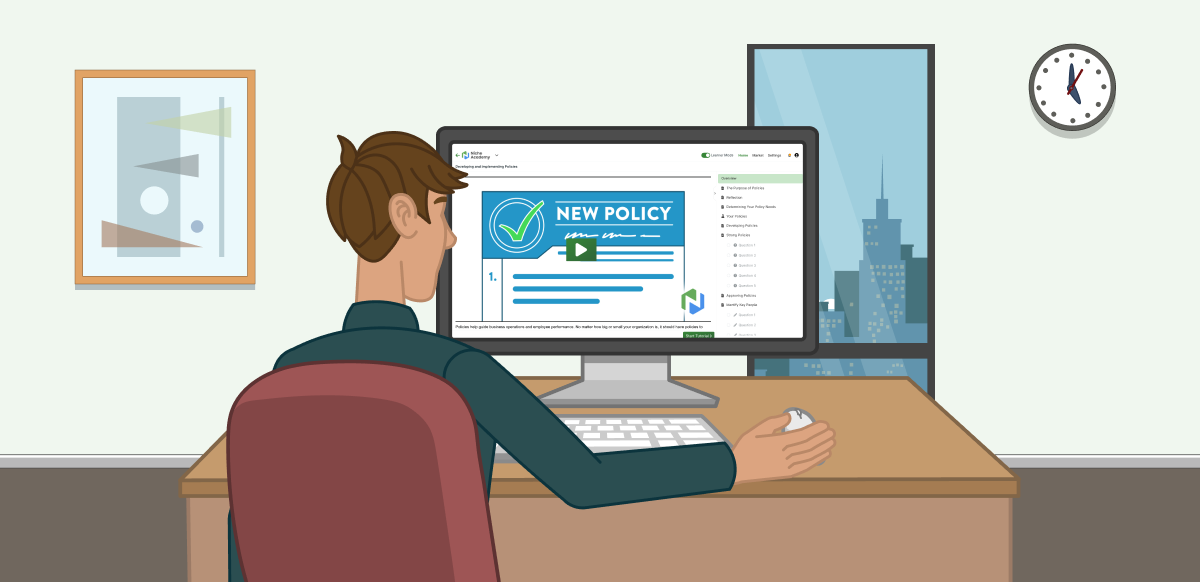
Here are some examples of microlearning created by the Niche Academy learning design team.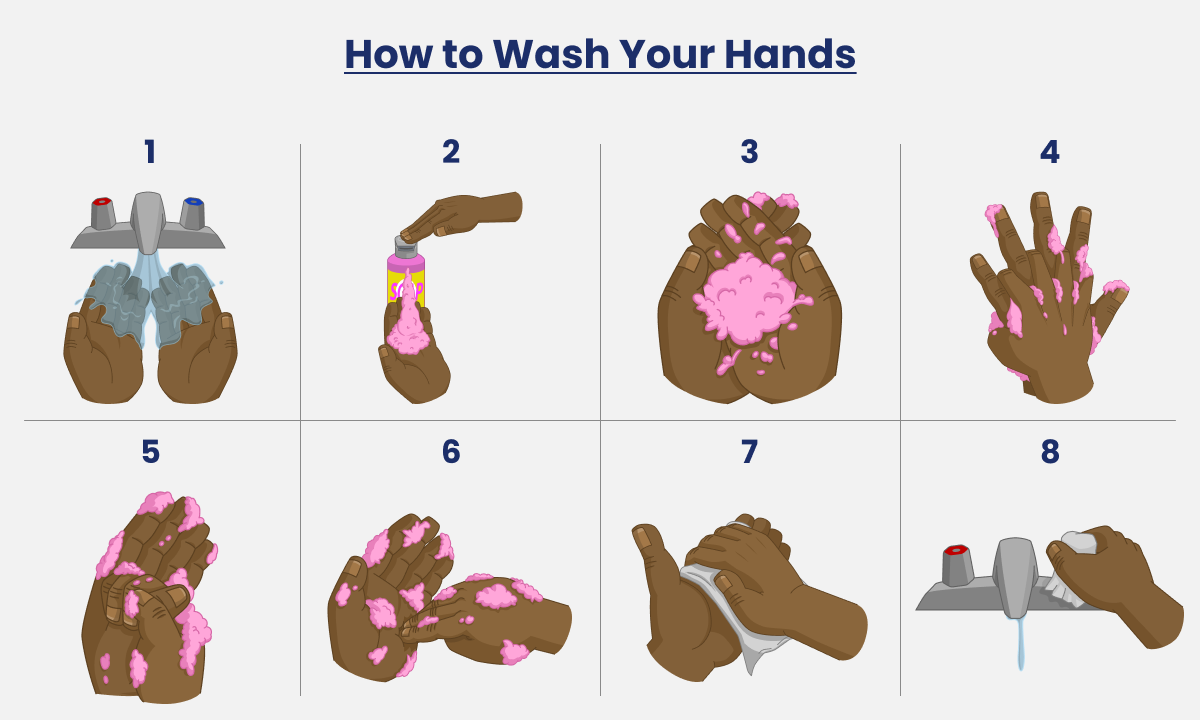
Think about recipe blogs. There are big ol' blogs where you have to scroll through a 10-paragraph essay before you get to the steps and ingredients. Then, there are straightforward recipes that present the ingredients and steps right up front. The big ol' blog is trying to accomplish two objectives: get you to read their story (while pumping up their SEO) and then provide the information for the dish. The straightforward recipe has one objective: give you the information for the dish. Which one feels more micro to you, and which would you rather use?
When Does Microlearning Work Best?
Microlearning's strength lies in its delivery. By being small, it's easy to deliver right when someone needs it. You don't need to enroll in medical school to learn about possible negative side effects of a new medication; you just need a pamphlet. You don't need an hour-long in-person meeting to tell staff that the paper plates moved from one cupboard to another; you just need a little Post-it note telling staff where to look.
There's a lot of information out there, and it can be tough to wade through it all to find what you need. Well-designed microlearning cuts out all the fluff, leaving you with just the information you need. It also makes it easier to tell whether the information applies to your situation. Would you rather read the big ol' blog or the straightforward recipe to see if you have the right ingredients? When you need to fix a problem on the job, it helps to get the information you need as quickly.
What Are the Limitations of Microlearning?
Because microlearning delivery is so small and constrained, it relies heavily on the learner’s prior knowledge and experiences. A recipe isn't going to show you how to "brunoise your mirepoix". You will need to have learned elsewhere that those terms mean to dice your onion, carrots, and celery finely. And if you're worried your learners need more information to understand everything, you might add more objectives or materials, moving from micro- to plain learning, which isn't a bad thing! Regular ol' plain learning is great! It just won't be microlearning.
Microlearning sometimes discourages exploration and curiosity. The one piece of learning content presents one answer, one solution to a problem that could potentially have many solutions. A good piece of microlearning that teaches you how to reheat frozen bread in an oven won't tell you that you can do the same thing with a microwave. Without knowing the other options, you won't discover if you like one over another. Or why you'd use one process instead of the other!
How to Create and Share Microlearning With Niche Academy
It's easy to create microlearning in Niche Academy and track its usage. Any tutorial you create can be as big or as small as you want, but we recommend collecting all microlearning material related to a topic within one tutorial, with each part as a lesson. You can then link your learner to the exact lesson needed when they need it.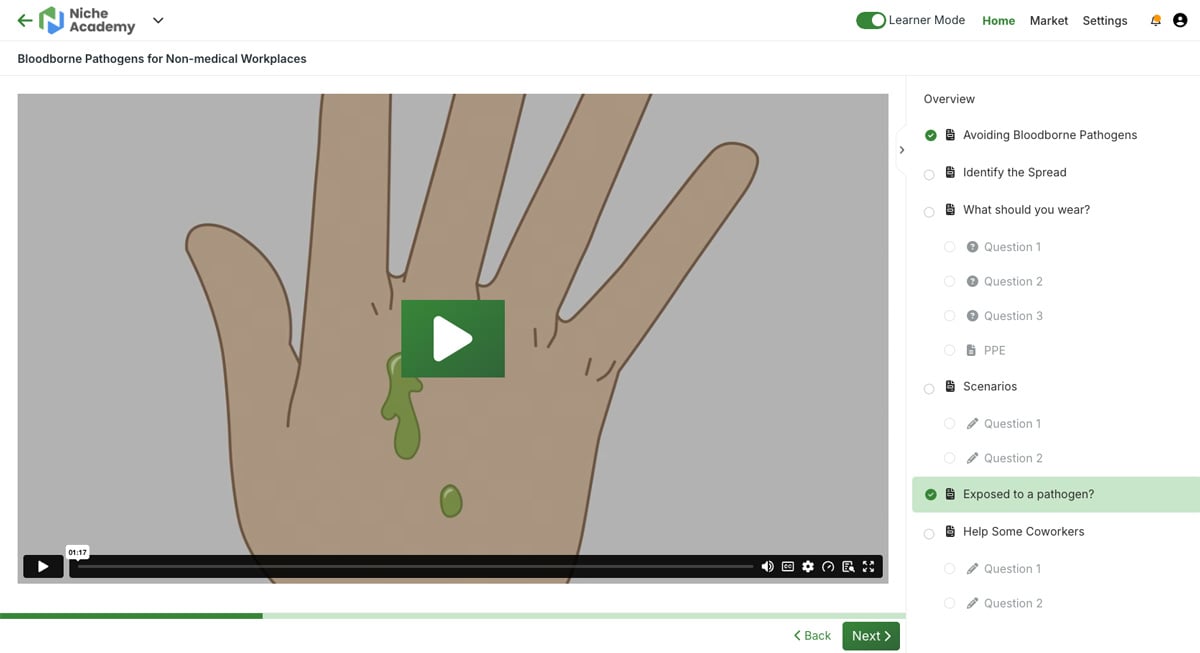
Each lesson in Niche Academy can have multiple elements. But, you should keep your lesson "micro" by only including one element. Use a video. Create a text and image-based article. Upload an audio file.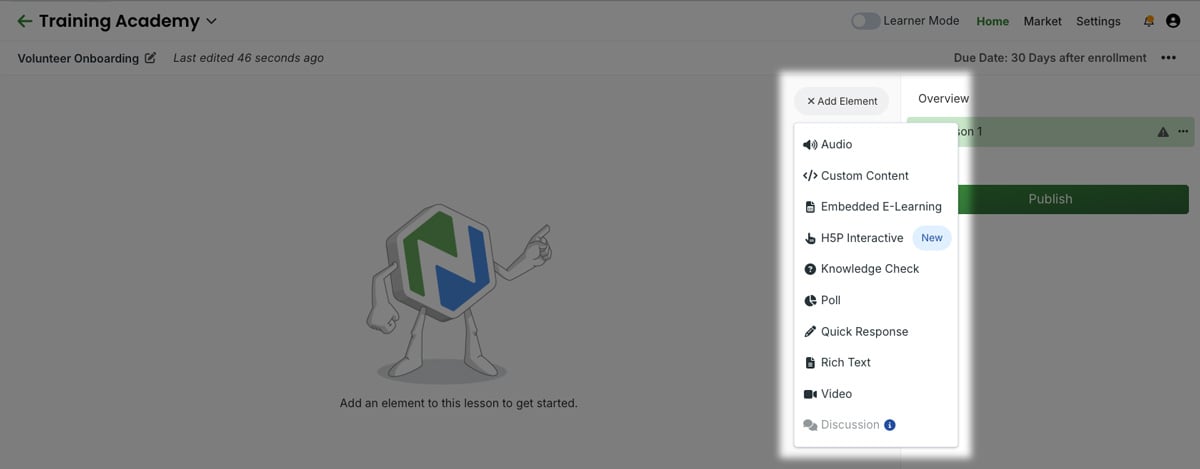
You can also embed your microlearning in your website using our widgets, making it easier for people to find.